All products

Solver

SolvSRK for Sim-to-Embed

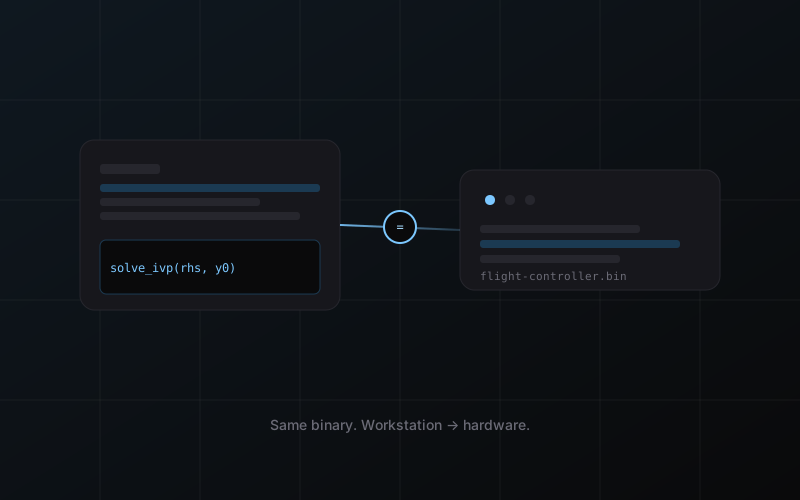
Same binary, workstation to flight hardware.

Engineers develop in simulation and deploy to embedded hardware. The solver that worked in the lab usually isn't the solver that ships on the device. SolvSRK is one solver that runs in both places, with identical behavior and no translation step.

Abstract illustration of a workstation and an embedded device sharing the same code path.

Imagine yourself in these moments. Same product, different industries.

Automotive EV

The engineer at 2 AM.

She has been running a simulation for six hours. Battery thermal management for an electric vehicle. The model has to predict how 7,000 cells behave under fast charging, under desert heat, under a Minnesota winter. She hits run. Three hours later, the screen fills with infinities. The math exploded. She does not know why. She adjusts a parameter, guesses, hits run again. Another three hours. Another crash. Her deadline is Friday. It is Wednesday. She has been here before. She will be here again.

Now imagine a solver that does not crash on the messy data real systems actually produce. The run that used to fail at 2 AM finishes the first time. The parameter sweep she needed to explore for three days finishes in one. The deadline is not a threat. It is a schedule.

Autonomous drones

The simulation that lied.

In simulation, the flight controller handled crosswinds beautifully. Thousands of test runs. Green across the board. Ship it. First real flight, real wind, real turbulence, and the math engine inside the controller saw numbers it had never seen in the clean simulation. It crashed. Not the drone. The math. Then the drone.

The simulation was not wrong. It just never saw the real world. The gap between “works in the lab” and “works in the field” is measured in lawsuits. With the same binary running in both places, the simulation stops lying.

Defense program office

The $12 million rewrite.

A defense contractor wins a $400 million contract to build an autonomous underwater vehicle. The navigation system runs differential equations in real time — position, current compensation, drift correction. The simulation tools work fine on the workstation. The embedded processor on the vehicle sees data the simulation never did. The math crashes. The vehicle surfaces unexpectedly. Test failed. Rewrite the code, re-run certification, re-schedule the sea trial. Three months. $12 million. For a math problem that should have been solved in software.

Consumer hardware

The recall.

Twelve executives. A conference room. A lawyer is explaining that 400,000 vehicles need to come back to the dealer. The battery management software miscalculated under certain charging conditions — conditions that existed in the real world but not in the simulation. The cost is $1.2 billion. The brand damage is incalculable. Someone asks how this happened. The answer is simple. The simulation was perfect. Reality was not.